top of page

Post Your Today's Happy Experience, No Matter How Tiny!

Daily happiness writing improves well-being — here’s how.

ree

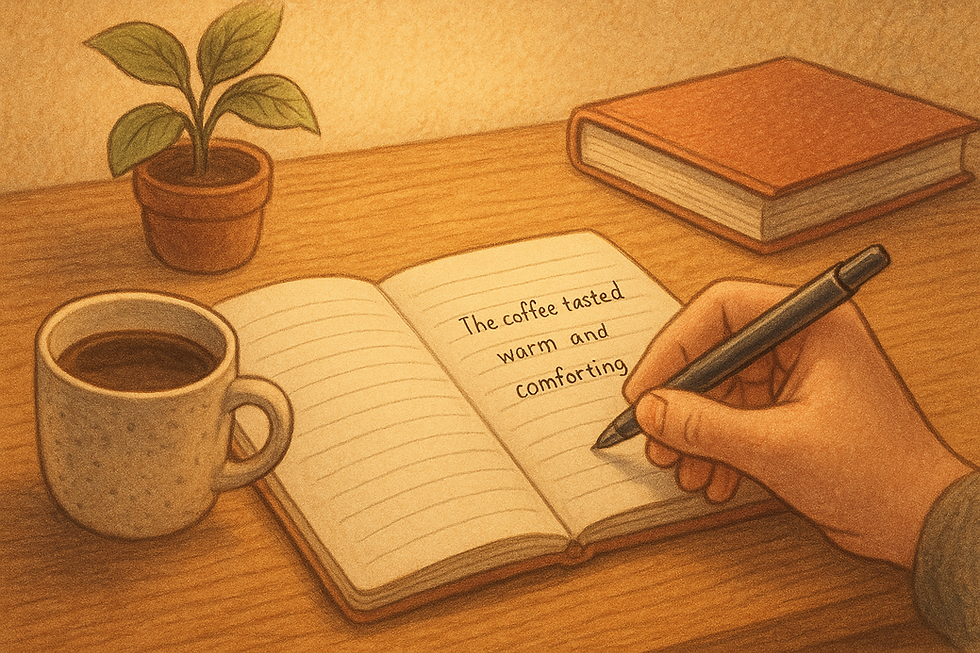
I still remember a quiet evening when I came home feeling drained. Nothing seemed to go right that day. Before sleeping, I opened a small notebook and forced myself to write just one happy moment. I wrote, “The coffee tasted warm and comforting.” It felt too small to matter. But the next night I wrote two things. Then three. Slowly I began noticing moments I used to ignore: a finished task, a friendly message, a light-hearted joke. My days did not change overnight — but I changed how I saw them.


Many people today practice this simple habit. And research is beginning to support it as a real well-being booster. This is not about gratitude lists. It is simply about writing your own happy or successful moments of the day, and letting your mind relearn where the light is.


What the research shows

  • A study found that when people wrote for 20 minutes a day for three days about a positive life experience (versus a control topic), they later reported improved physical health and showed broader global cognitive focus.


  • A systematic review published in 2025 examined 51 studies using “positive writing” techniques (like writing about best possible self, positive experiences, “three good things,” etc.) Among non-clinical adults, the review found consistent benefits for wellbeing and positive affect (happiness, life satisfaction, optimism).


  • A meta-analysis comparing expressive writing (writing about negative emotions or trauma) with positive writing (writing about positive events or experiences) showed that for general populations, positive writing led to better mood outcomes than expressive writing.


  • A 2024 pilot study added an interesting twist: it found that the mood benefit from positive expressive writing was stronger for people who reported higher dietary quality and fibre intake. That suggests lifestyle factors can influence how much benefit you get from writing.


  • In another recent RCT, positive-emotion writing over several weeks improved subjective well-being and reduced negative emotions such as anxiety and depression among students.


Why writing daily happy moments works

It helps your brain notice the good.

When you plan to record daily happiness moments, your attention naturally begins looking for good things — otherwise they might go unnoticed. Writing then captures them for later reflection.


It helps memory store the good.

Good feelings disappear fast. Writing them down gives them permanence so that you can revisit them later — which boosts mood and self-appreciation over time.


It builds a personal record of growth.

Your notebook or app becomes proof: small wins, small joys. On tough days it becomes a reminder that even if today was hard, you have had good days before — and can have them again.


It’s simple, honest and realistic.

You don’t need extraordinary events. Small is powerful. A kind word, a completed chore, a warm cup of tea — if it mattered to you, it’s worth writing down.


It can work even better alongside good lifestyle habits.

As shown in research, dietary quality and general lifestyle seem to moderate how strong positive-writing effects are.


The Truth Behind Daily Achievement Notes

  • You do not need major life events. The research often finds that small or everyday positive experiences give meaningful wellbeing boosts.


  • You don’t need long essay-style entries. Short writing — even a few sentences — works well.

  • Results vary from person to person. Factors like lifestyle, diet, stress and baseline mood can influence how effective writing is.


  • Writing with no pressure. Forcing yourself to find a “big success” every day can feel artificial. Authentic, honest writing — even of tiny positive moments — has power.


How you can start this habit today

  1. At the end of each day, write 2–4 short moments: happy things, small wins, things you did well.

  2. Keep entries brief — one or two sentences is enough.

  3. Do not aim for perfection. Aim for truth.

  4. Try once a day or 4–5 times a week. Consistency matters more than perfection.

  5. Once a week or month, review past entries — see how far you’ve come, remember what felt good, and appreciate growth.


Final gentle reminder

You don’t need a “perfect day” to write down happiness. You only need one small moment that felt good. The more you look for those moments, the more you find them. The more you collect them, the more they build your mood, your memory, and your sense of progress. Your daily life already contains hundreds of small bright points. Writing them down simply helps you see them.


Moments fade fast, but your story won’t—begin now!


Sources

  • Minimal M. & colleagues. “The health benefits of writing about positive experiences: the role of broadened cognition.” Journal of Psychosomatic Research, 2009.

  • Hoult L. M., Wetherell M. A., Edginton T., Smith M. A. “Positive expressive writing interventions, subjective health and wellbeing in non-clinical populations: A systematic review.” PLOS One, 2025.

  • Smith M. A. & colleagues. “Efficacy of expressive writing versus positive writing in different populations: Systematic review and meta-analysis.” Journal of Nursing Open, 2023.

  • Levová L. & Smith M. A. “The Moderating Role of Dietary Quality and Dietary Fibre Intake on the Mood Effects of Positive Expressive Writing: A Pilot Study.” Nutrients, 2024.

  • Zhang X. & colleagues. “Can positive emotional writing improve the emotional health level of international medical students? Evidence from a randomized controlled trial.” BMC Medical Education, 2024.


bottom of page